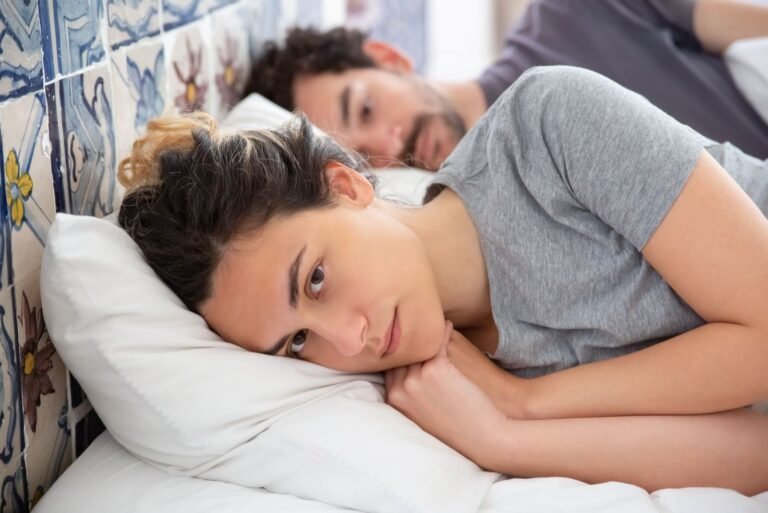
Hormones and Sleep After 50: How Estrogen, Progesterone, and Melatonin Affect Your Nights
This article contains affiliate links. As an Amazon Associate, we earn from qualifying purchases, at no extra cost to you. Learn more.
After 50, three hormones shape your nights more than any others: estrogen, which helps control body temperature; progesterone, which has a natural calming, sleep-promoting effect; and melatonin, which times your sleep. During the menopause transition, estrogen and progesterone fall and swing unpredictably, and melatonin output drifts lower with age. The result for many women is lighter sleep, more night waking and night sweats. The good news is that each of these changes has a practical fix.
| Hormone | What it does for sleep | What happens after 50 | What can help |
|---|---|---|---|
| Estrogen | Keeps your temperature comfort zone wide; supports mood | Falls and fluctuates, triggering hot flashes and night sweats | Cooler bedroom; hormone therapy or non-hormonal medicine if severe |
| Progesterone | Its byproducts calm the brain much like a mild sedative | Drops early in perimenopause, often before estrogen | Oral micronized progesterone at bedtime, if prescribed |
| Melatonin | Signals night and sets sleep timing | Lower output and earlier timing with age | Morning light, dim evenings; low-dose melatonin in some cases |
| Cortisol | Rises toward morning to wake you | Can rise earlier with stress and poor sleep | Wind-down routine, regular schedule, CBT-I |
How does falling estrogen disrupt sleep?
Estrogen helps the brain’s thermostat tolerate small changes in heat. When levels fall, that comfort zone narrows sharply. A small rise in core temperature under the covers can trigger a hot flash, and a hot flash during sleep usually means waking up.
Estrogen also affects mood and breathing during sleep. Rates of obstructive sleep apnea rise in women after menopause, which is one reason loud snoring that starts in your 50s deserves attention. See sleep apnea in women after 50.
In the Study of Women’s Health Across the Nation (SWAN), reports of trouble sleeping climbed from the premenopausal years into late perimenopause and stayed higher after menopause. Night sweats were one of the strongest predictors of poor sleep.
Why does low progesterone make sleep lighter?
Progesterone is the hormone many women do not hear about. When your body breaks it down, it produces a substance called allopregnanolone, which acts on the same calming brain receptors (GABA receptors) targeted by many sleep medicines. That is why progesterone has a gentle sedating effect.
Progesterone often declines early in perimenopause, as ovulation becomes less regular. Some women notice lighter, more broken sleep years before their periods stop, especially in the days right before a period.
What are common signs of low progesterone?
There is no single test that captures this well, because levels change across the cycle. Clues women often report include:
- Lighter, more broken sleep, especially before a period
- Shorter cycles, such as every 21 to 24 days
- Heavier periods or spotting before a period
- More anxiety or irritability in the second half of the cycle
- Breast tenderness before periods
These symptoms overlap with thyroid problems, anemia and stress, so they are a reason to see a doctor, not a diagnosis.

Does oral progesterone help with sleep and anxiety?
For many women, yes, and the research is encouraging. Oral micronized progesterone (brand name Prometrium, and generics) is chemically identical to the progesterone your body makes. It is different from synthetic progestins used in older hormone therapy studies.
| Study | Who | What they found |
|---|---|---|
| Schussler and colleagues, 2008, Psychoneuroendocrinology | 10 postmenopausal women, sleep lab | 300 mg at bedtime reduced time spent awake during the night without harming next-day thinking |
| Hitchcock and colleagues, 2012, Menopause | 133 healthy postmenopausal women | 300 mg at bedtime reduced hot flashes and night sweats and improved sleep versus placebo |
| Prior and colleagues, 2023, Scientific Reports | 189 perimenopausal women still having periods | 300 mg at bedtime reduced night sweats and improved sleep quality versus placebo; it did not increase depression |
On anxiety, the evidence is thinner. The calming effect through GABA receptors makes a benefit plausible, and women in the 2023 trial reported less emotional interference with daily life. But progesterone is not an anti-anxiety treatment on its own. If anxiety is severe, talk with your doctor about proven options.
What should you know before asking about progesterone?
- It is taken at bedtime because it can cause drowsiness and dizziness.
- If you take estrogen and have a uterus, you need a progestogen to protect the uterine lining. Micronized progesterone is a common choice.
- Peanut allergy matters: Prometrium capsules contain peanut oil.
- Compounded progesterone creams are not reliably absorbed and are not proven to protect the uterus. Major medical societies recommend FDA-approved products instead.
- Doses vary. Trials used 300 mg; many doctors start at 100 to 200 mg.
Does melatonin change after 50?
Yes. Melatonin output tends to fall with age, and the body clock often shifts earlier. That combination helps explain why many women over 50 get sleepy early in the evening and wake at 4 or 5 a.m. Read more in melatonin after 50.
Before reaching for a pill, use light. Bright morning light and dim evenings are the strongest signals your body clock gets. Low-dose melatonin (often 0.5 to 1 mg) can help with timing, but more is not better, and US supplements vary widely in actual content.
What can you do tonight, with or without hormones?
Hormones set the stage, but daily habits decide a lot of how you sleep. A simple plan:
| Time | Action | Which hormone it helps |
|---|---|---|
| Within an hour of waking | 15 to 30 minutes of outdoor light | Melatonin timing, cortisol rhythm |
| Afternoon | Caffeine cutoff by about noon to 2 p.m. | Protects deep sleep |
| Evening | Earlier dinner, limited alcohol | Fewer night sweats |
| 1 hour before bed | Dim lights, cool room, calm routine | Melatonin rise, lower stress |
| Night | Fan, light layers, clock turned away | Shorter wakings after flashes |
If you are still struggling after a few weeks, CBT for insomnia is the first-line treatment and works well in menopause. See CBT for insomnia.
When should you talk with your doctor?
- Night sweats or hot flashes wake you most nights
- Poor sleep has lasted more than three months
- You snore loudly, gasp or wake with headaches
- Your periods are very heavy, very close together, or you bleed after menopause
- Low mood or anxiety is affecting daily life
Bring a two-week sleep and symptom log. It makes it far easier to decide whether hormone therapy, progesterone alone, a non-hormonal medicine or CBT-I fits you best.
How can progesterone help sleep?
Gynecologist Karen Tang, MD, explains in under three minutes how oral progesterone can help sleep in perimenopause and menopause.
What helps support your hormones’ sleep signals?
These tools target the light, temperature and tracking pieces above. They do not replace treatment.
- Verilux HappyLight Lumi Light Therapy Lamp: Bright morning light on dark days to help keep your body clock and melatonin timing on track. Check price on Amazon
- Hooga Amber Book Light: Warm amber light for evening reading that is less stimulating than a bright lamp or screen. Check price on Amazon
- Fitbit Inspire 3: A simple tracker to log wake-ups and spot patterns around your cycle before a doctor visit. Check price on Amazon
- The New Menopause by Mary Claire Haver, MD: An OB-GYN’s clear guide to hormone changes and every treatment option. Good reading before your appointment. Check price on Amazon
Frequently asked questions
Can a blood test show if hormones are causing my insomnia?
Not reliably during perimenopause, because levels swing day to day. Doctors usually diagnose based on age, cycle changes and symptoms. Tests can rule out other causes, such as thyroid problems or anemia.
Is progesterone cream as good as the pill for sleep?
No. The sleep effect comes mainly from how the body processes oral progesterone. Over-the-counter creams vary in strength and are not proven to help sleep or protect the uterus.
Will hormone therapy fix my sleep?
It often helps a lot when night sweats are the main cause. If you also have insomnia habits or sleep apnea, those need their own treatment.
Why is my sleep worse right before my period?
Progesterone falls sharply in the days before a period. In perimenopause, those drops can be bigger and less predictable, so sleep often gets worse at that time.
Sources and further reading
- Progesterone reduces wakefulness in sleep EEG in postmenopausal women, Psychoneuroendocrinology
- Progesterone for treatment of symptomatic menopausal women, Climacteric
- Oral micronized progesterone for perimenopausal night sweats and sleep, Scientific Reports
- Compounded Bioidentical Hormone Therapy position statement, Endocrine Society
- Sleep and Menopause, The Menopause Society
- Hormone therapy: Is it right for you?, Mayo Clinic
- Perimenopause: Symptoms and causes, Mayo Clinic
- Estrogen, Wikipedia
- Progesterone, Wikipedia
A quick note: this is general health information, not medical advice. Talk with your doctor before starting, stopping, or changing any treatment.