How to Stay Asleep After 50: A Plan for Broken Sleep
This article contains affiliate links. As an Amazon Associate, we earn from qualifying purchases, at no extra cost to you. Learn more.
To stay asleep after 50, work on two things at once: fewer wake-ups, and faster returns to sleep when you do wake. That means finding and fixing your main wake-up trigger, keeping one wake time every day, and getting out of bed when you have been lying awake for a while instead of fighting it. Most people see a difference within about four weeks of steady practice.
- Find your top trigger: bladder, heat, pain, noise, alcohol or worry.
- Anchor your wake time: same time all seven days.
- Use the 20 minute rule: awake for what feels like 20 minutes, get up until sleepy.
- Stop padding the night: extra time in bed spreads sleep thinner.
Why does sleep break up more after 50?
Some of it is normal aging. MedlinePlus notes that as people get older they tend to spend less time in deep sleep and wake more often during the night, while total sleep stays similar or drops a little. Lighter sleep means a sound or a hot flash that you would once have slept through now pulls you fully awake.
The rest comes from things stacking on top of that lighter sleep: menopause symptoms, a bladder that fills faster, aches, medicines, a partner who snores. This post is about the whole night breaking up. If your problem is one stubborn wake-up in the small hours, see our guide to why you wake up at 3 a.m.
What is most likely waking you up?
Here are the usual causes, roughly ordered from most to least common for women in their fifties and sixties. Your own order may differ, so check them against a week of notes.
| Cause | How often it is the culprit | Clues | First move |
|---|---|---|---|
| Bathroom trips | Very common | You wake needing to go, once or more | Taper fluids two to three hours before bed |
| Heat and night sweats | Very common around menopause | Waking hot, damp or kicking off covers | Cooler room, lighter layers |
| A learned waking habit | Common | Wide awake for no clear reason, clock watching | Stimulus control, below |
| Pain or stiffness | Common | Waking when you roll over | Pillow support, talk with your doctor |
| Alcohol | Common | Restless second half of the night after drinks | Earlier, smaller, or none |
| Noise and light | Common | Traffic, a snoring partner, early dawn | White noise, blackout curtains |
| Sleep apnea | Under-recognized in women | Snoring, gasping, morning headaches | See your doctor for testing |
| Restless legs | Less common | Urge to move your legs in the evening | See your doctor |
For the two biggest culprits, see our guides to waking up to pee at night and the best bedroom temperature for sleep.
What should you do when you wake in the night?
The goal is to leave your brain as close to sleep as possible. Every bright light, every look at your phone and every mental calculation of how many hours are left pushes you further away.
- Do not check the time. Turn the clock away before bed.
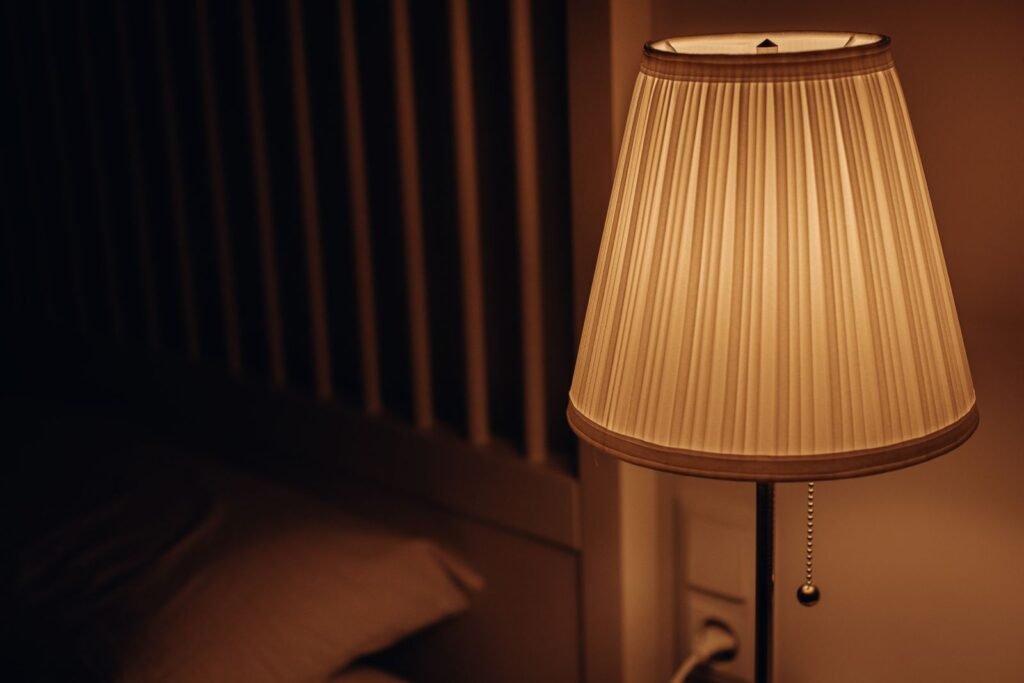
- Deal with the cause in low light. Bathroom, water, a layer off, all with night lights rather than overhead lights.
- Let your body settle. Slow breathing with a longer out-breath, or relaxing each muscle group from your feet up.
- If sleep does not return in what feels like 20 minutes, get up. Go somewhere dim and do something dull: a paper book, folding laundry, a puzzle.
- Go back when you feel sleepy, not just tired. Repeat if needed.
- Get up at your usual time no matter how the night went.
Which night-time habits keep you awake longer?
| Instead of this | Try this |
|---|---|
| Scrolling your phone to pass the time | A paper book under a dim, warm light |
| Lying still and trying harder | Getting up and coming back when sleepy |
| Working out how many hours are left | Clock turned to the wall |
| Sleeping in to make up for it | Same wake time, then morning daylight |
How do stimulus control and sleep restriction work?
These two techniques are the behavioral core of CBT-I, the first-line treatment for chronic insomnia recommended by the American College of Physicians. They target the learned waking habit in the table above, which is often what keeps broken sleep going long after the original trigger has faded.
What are the stimulus control rules?
- Go to bed only when sleepy.
- Use the bed for sleep and intimacy only: no screens, work or worrying there.
- If you cannot sleep, get up and go back only when sleepy.
- Keep the same wake time every day.
- Avoid daytime naps, or keep one short and early.
The idea is to rebuild a simple link in your brain: bed means sleep. It feels like a lot of getting up for the first week or so, then the nights usually get easier.
What is sleep restriction, and is it safe to do alone?
Sleep restriction means temporarily limiting your time in bed to roughly the amount of sleep you are actually getting, then widening it as sleep becomes more solid. Less time in bed builds stronger sleep pressure, so sleep becomes deeper and less broken.
It works, but it is best done with guidance from a CBT-I clinician or a structured program. You will likely feel sleepier during the day at first, which matters if you drive. It is generally not advised without medical input if you have bipolar disorder, a seizure disorder, untreated sleep apnea, or a job where drowsiness is dangerous. The plan below uses a gentler version that most people can try on their own.
What does a 4-week plan for broken sleep look like?
Each week builds on the last. Keep a simple sleep diary throughout: time into bed, time up, and roughly how long you were awake.
| Week | Focus | What you do |
|---|---|---|
| 1 | Measure and set the anchor | Diary every morning. Pick one wake time for all seven days. Make the room cool, dark and quiet. |
| 2 | Fix your top trigger | Tackle the number one cause from your diary. Start the stimulus control rules. |
| 3 | Tighten the night | If you are asleep less than about 85 percent of your time in bed, push bedtime later by 30 to 45 minutes. Keep the wake time. |
| 4 | Review and widen | If nights feel more solid, move bedtime 15 minutes earlier. Repeat weekly while sleep stays solid. |
What does week 3 look like with real numbers?
Here is a made-up example. In week 1 she is in bed from 10:00 p.m. to 6:30 a.m., which is eight and a half hours, but her diary shows about six and a half hours of sleep. That is about 76 percent.
- New bedtime: 10:45 p.m., but only if she feels sleepy. If not, she waits.
- Wake time: stays at 6:30 a.m., every day.
- New time in bed: seven and three quarter hours.
- Week 4 check: if she is now asleep for most of that window and waking less, bedtime moves to 10:30 p.m.
The first few nights can feel worse before they feel better. That is normal and usually passes within a week. If daytime sleepiness becomes hard to manage, ease off and talk with a clinician.
What should you do if the plan is not working?
Give it the full four weeks before judging. If your diary shows little change, the cause is likely something behavior change alone will not fix, like apnea, pain, night sweats or mood. That is a reason to see your doctor, not a sign you failed. A structured CBT for insomnia program, with a therapist or a good digital course, is the natural next step.

When should you see a doctor?
- Broken sleep at least three nights a week for three months
- Loud snoring, gasping, or someone sees you stop breathing
- Dozing off during the day, especially while driving
- Getting up to urinate two or more times most nights
- Pain, night sweats or leg discomfort that wake you most nights
- Low mood or anxiety that is with you most days
Bring your diary. It gives your doctor far more to work with than a description of bad nights.
Want a sleep psychologist on staying asleep?
Sleep psychologist Ashley Mason, PhD, explains how to fall asleep and stay asleep.
What can help you stay asleep through the night?
These target the most common wake-up triggers and support the plan above. None of them replace the habits, but they remove some easy reasons to wake.
- Magicteam White Noise Machine: Steady, non-looping sound with an all-night setting, useful if traffic, a dog or a snoring partner is high on your trigger list. Check price on Amazon
- AUVON Motion-Sensor Night Lights (4-Pack): Soft, warm light that comes on as you walk by, so bathroom trips stay safe without a bright overhead light waking you fully. Check price on Amazon
- DREO Tower Fan: A quiet fan with a remote. Moving air helps when heat or night sweats wake you, and the hum doubles as background sound. Check price on Amazon
- Quiet Your Mind and Get to Sleep by Colleen Carney, PhD, and Rachel Manber, PhD: A CBT-I workbook that walks through stimulus control and sleep scheduling in more depth, a good companion if you want structure for the four weeks. Check price on Amazon
Frequently asked questions
How many times is it normal to wake up at night after 50?
Brief awakenings happen to everyone, and they become more frequent with age. Many are so short you never remember them. Waking is worth addressing when it leaves you unrefreshed or you spend long stretches lying awake.
Should I stay in bed and rest if I cannot sleep?
Resting quietly feels sensible, but long stretches awake in bed can teach your brain that bed is a place for being awake. If you have been awake for what feels like 20 minutes and feel alert, get up until you are sleepy again.
Is it better to go to bed earlier if I keep waking up?
Usually not. An earlier bedtime adds time in bed without adding sleep, so the night breaks up even more. A slightly later bedtime with a fixed wake time often gives more solid sleep.
Can my mattress or pillow cause broken sleep?
They can if pain or stiffness wakes you when you turn over. Supportive pillows between the knees or under the neck help some people. If pain wakes you most nights, talk with your doctor about the cause.
How long until stimulus control starts to work?
Many people notice the first change within one to two weeks, though the first few nights can feel harder. Sticking with the same wake time is what makes it work, so keep going through the rough patch.
Sources and further reading
- Aging changes in sleep, MedlinePlus Medical Encyclopedia
- Sleep and Older Adults, National Institute on Aging
- Insomnia: Treatment, National Heart, Lung, and Blood Institute
- Insomnia, Sleep Education by the American Academy of Sleep Medicine
- Sleep Disorders, MedlinePlus, National Library of Medicine
- Insomnia: How do I stay asleep?, Mayo Clinic
- Sleep tips: 6 steps to better sleep, Mayo Clinic
- Insomnia, Wikipedia
A quick note: this is general health information, not medical advice. Talk with your doctor before starting, stopping, or changing any treatment.