Why Am I Such a Light Sleeper After 50?
This article contains affiliate links. As an Amazon Associate, we earn from qualifying purchases, at no extra cost to you. Learn more.
Most women become lighter sleepers after 50 because the body makes less deep sleep with age, and that drop is a main reason older adults wake more often. With less deep sleep, a creaking floor, a partner rolling over or a hot flash is more likely to wake you. Hormone changes, pain, a full bladder and some medicines add to it. Blocking noise and light, keeping the room cool and treating the cause usually helps.
| Cause | What it feels like | First thing to try |
|---|---|---|
| Less deep sleep with age | Waking at small noises you once slept through | Steady background sound, earplugs |
| Night sweats and hot flashes | Waking warm, restless or damp | A cooler room and lighter bedding |
| Needing to pee | Waking with a full bladder once or more a night | Fewer fluids in the last two hours before bed |
| Pain or stiffness | Waking when you change position | Better pillow support, talk to your doctor |
| Alcohol, caffeine, medicines | Restless second half of the night | Earlier cutoffs, a medication review |
What does it mean to be a light sleeper?
“Light sleeper” is not a medical diagnosis. It is the everyday way of describing someone who wakes easily, often from noise, light or movement, and who may struggle to get back to sleep. Sleep specialists talk about sleep fragmentation: sleep that is broken into pieces by frequent awakenings, even if the total hours in bed look fine.
Some people have always been light sleepers. But if you used to sleep through thunderstorms and now wake when the furnace clicks on, that change usually has a reason.
Why do we become lighter sleepers as we age?
The biggest reason is a drop in deep sleep. According to MedlinePlus from the National Library of Medicine, the amount of deep sleep decreases with age, and this is a main reason older adults wake more often. It reports that older adults wake on average three or four times a night, and that the shift between sleep and waking can feel abrupt, which is exactly why many people describe themselves as lighter sleepers.
Deep sleep is also called slow-wave sleep. The Wikipedia entry on slow-wave sleep notes that it declines with age starting around midlife, and that women generally have more of it than men, at least until menopause. In other words, many women lose some of their natural advantage just as other sleep disruptors arrive.
Mayo Clinic puts it simply: sleep often becomes less restful as you age, so noise or other changes in your surroundings are more likely to wake you. MedlinePlus adds that total sleep time often stays about the same, but because it is lighter and more broken, you can still feel short of sleep. Our guide on how to get more deep sleep after 50 covers the habits that support this stage.
Can menopause make you a lighter sleeper?
Yes. Mayo Clinic lists being a woman as a risk factor for insomnia, noting that hormone changes during menopause may play a role and that night sweats and hot flashes often disrupt sleep. The National Institute on Aging adds that mood changes, especially depression, and the extra stress many women carry in midlife can also get in the way.
Interestingly, NIA notes that research suggests waking up may trigger hot flashes, not only the other way around. So a light sleeper who wakes at a small noise may then have a flash that keeps her up longer. Breaking that chain from either end, quieter nights or fewer flashes, can help. Our article on hormones and sleep after 50 explains the bigger picture.
What else makes you wake at every little sound?
A drop in deep sleep sets the stage, but something usually pulls you all the way awake. MedlinePlus and Mayo Clinic point to these common culprits in older adults:
- A full bladder. Needing to urinate is one of the most common reasons for waking at night. See our guide on why you wake up to pee at night.
- Pain. Arthritis, back problems and other ongoing pain can wake you every time you shift position.
- Anxiety and low mood. A worried mind tends to sleep more lightly. MedlinePlus notes that sleep problems are also a common sign of depression.
- Medicines. Mayo Clinic notes that older people typically take more prescription drugs, which raises the chance of medicine-related sleep problems. MedlinePlus suggests asking your provider whether any of yours affect sleep.
- Alcohol and caffeine. MedlinePlus advises avoiding caffeine for several hours before bed and limiting alcohol, which can disrupt sleep later in the night.
- Less daytime activity. Mayo Clinic notes that a lack of activity can disrupt a good night’s sleep.
Could a sleep disorder be the real cause?
Sometimes. MedlinePlus lists sleep apnea and restless legs syndrome among the sleep problems seen in older adults. If you snore loudly, wake gasping, or feel very sleepy during the day despite enough time in bed, those are signs to raise with a doctor. Mayo Clinic’s snoring page lists witnessed breathing pauses, gasping at night and morning headaches as warning signs of obstructive sleep apnea.
How can a light sleeper sleep more soundly?
You cannot rebuild your 30-year-old sleep, but you can make the night much quieter for the sleep you have.
Block or mask sound
Sudden noises are a common trigger for light sleepers. Cleveland Clinic explains that steady background noise can mask sudden sounds like a snoring partner, a barking dog or a garbage truck. White noise, pink noise and fan sounds are all reasonable choices, since no study has directly compared them. Foam earplugs add another layer. If a partner’s snoring is the trigger, our guide to sleeping with a snoring partner goes deeper.
Control light
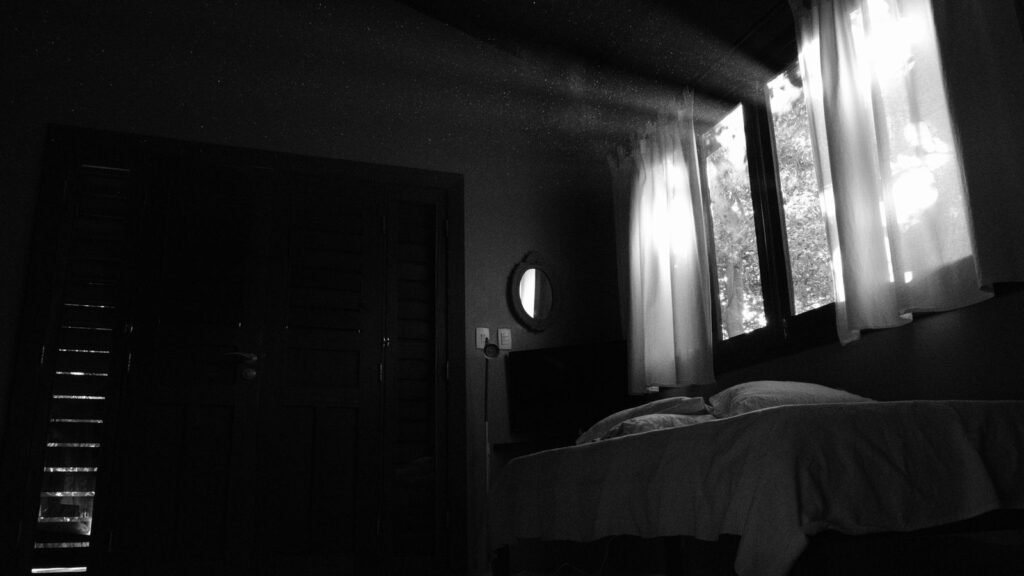
Early sunrise, streetlights and a partner’s reading lamp can all nudge a light sleeper awake. Blackout curtains or a sleep mask help, and so does keeping phones and TVs out of the bedroom, which NIA also recommends.
Keep the room cool
NIA suggests a bedroom that is comfortably cool and as quiet as possible. This matters even more if night sweats are part of the picture, since heat can tip a light sleep into waking.
Protect your sleep drive
MedlinePlus recommends a regular sleep and wake time, limiting daytime naps and exercising earlier in the day. Each of these builds a stronger need for sleep by bedtime, which can make the night less fragile.
Have a plan for when you wake
Waking briefly is normal at any age. The problem is lying there frustrated. MedlinePlus advises that if you cannot fall back asleep after about 20 minutes, get up, do something calm and return to bed when sleepy. One woman might keep a dim lamp and a familiar book in the living room so that when a noise wakes her at 3 a.m., she reads for a while instead of watching the clock, then goes back to bed once her eyes feel heavy. Our article on why you wake up at 3 a.m. has more on that middle-of-the-night window.
What does a sleep expert suggest when you wake and cannot get back to sleep?
Insomnia researcher Jack Edinger, PhD, of the National Jewish Health Sleep Center, explains why struggling in bed backfires and what to do instead.
When should a light sleeper see a doctor?
Being a lighter sleeper on its own is common after 50. Talk to your doctor if:
- Poor sleep makes it hard to get through your day. Mayo Clinic advises seeing a doctor when insomnia affects daily activities.
- You snore loudly, wake choking or gasping, or someone sees you stop breathing.
- You have an urge to move your legs at night, or wake to urinate several times every night.
- Low mood, worry or loss of interest come along with the poor sleep.
- You are thinking about a sleep medicine. MedlinePlus advises checking with your provider first, because older adults can react differently to these drugs.
If broken sleep has gone on for months, cognitive behavioral therapy for insomnia is often recommended. NIA notes it works best with a trained professional, and our guide to CBT for insomnia explains how it works.
What can help a light sleeper stay asleep?
These line up with the steps above: blocking sound and light, and calming your mind when you do wake. Our picks:
- Mack’s Soft Foam Earplugs: Soft foam plugs that cut down the small household noises that tend to wake light sleepers. Check price on Amazon
- Magicteam White Noise Machine: A bedside machine with steady white noise and fan sounds to mask sudden noises through the night. Check price on Amazon
- NICETOWN Blackout Curtains: Thick curtains that keep out streetlights and early sunrise, two common wake-up triggers. Check price on Amazon
- Quiet Your Mind and Get to Sleep by Colleen Carney, PhD, and Rachel Manber, PhD: A self-help book by two insomnia researchers built on CBT for insomnia, helpful if waking turns into hours of lying awake. Check price on Amazon
Frequently asked questions
Is it normal to become a light sleeper after 50?
Yes, it is very common. Deep sleep decreases with age, and MedlinePlus reports that older adults wake on average three or four times a night, so you are more likely to notice noises and movement.
Why do I wake up at the slightest noise?
MedlinePlus names the age-related drop in deep sleep as a main reason older adults wake more often, so small noises are more likely to get through. Steady background sound and earplugs can make sudden noises less jarring.
Does menopause make you a light sleeper?
It can. Night sweats, hot flashes and mood changes often disrupt sleep during menopause, and women’s natural advantage in deep sleep may fade around this time.
Can you train yourself to sleep more deeply?
You cannot fully reverse age-related changes, but regular sleep times, daytime activity, fewer naps, a cool dark quiet room and less alcohol all support steadier sleep.
Is waking up several times a night a problem?
Brief awakenings are normal, especially after 50. It is worth seeing a doctor if you cannot fall back asleep, feel tired during the day, or have signs like loud snoring or gasping.
Sources and further reading
- Aging changes in sleep, MedlinePlus (National Library of Medicine)
- Insomnia: Symptoms and causes, Mayo Clinic
- Snoring: Symptoms and causes, Mayo Clinic
- Slow-wave sleep, Wikipedia
- Sleep Problems and Menopause: What Can I Do?, National Institute on Aging
- Can Pink Noise Help You Sleep?, Cleveland Clinic
A quick note: this is general health information, not medical advice. Talk with your doctor before starting, stopping, or changing any treatment.