Sleep After 50: Why It Changes and What Really Helps
This article contains affiliate links. As an Amazon Associate, we earn from qualifying purchases, at no extra cost to you. Learn more.
We can find ourselves going to bed earlier and waking more often even when we still need a full night of rest. For adults across the United States, these shifts can raise questions about aging, health, and what counts as a real problem. Our sleep may feel different without every change signaling illness.
We can separate common changes from sleep problems that deserve care. Frequent disruption and strong daytime sleepiness are worth discussing, not dismissing as a normal part of getting older. Small steps may support rest, while some conditions call for specific treatment. A change in sleep is worth understanding, especially when it leaves us struggling through the day.
Key Takeaways
- We generally need the same amount of sleep as other adults.
- Sleep can become lighter and shift earlier with age.
- Ongoing insomnia, apnea symptoms, or movement problems deserve attention.
- A short, early nap can help, but long or late naps can hurt night sleep.
- Habits can support rest, but they do not replace disorder-specific care.
- A short sleep diary can help us explain a pattern to a clinician.
How Much Sleep Do We Need After 50?
Most adults over 50 should still aim for 7 to 9 hours of sleep each night. Older adults generally need the same range recommended for adults overall, rather than fewer hours simply because they are older.
Sleeping less may reflect trouble getting enough quality sleep, not a lower need for rest. Ongoing sleep loss can raise the risk of high blood pressure, heart disease, and diabetes. Those outcomes do not happen to everyone, but they make persistent poor sleep worth taking seriously.
We should not treat a reduced need for sleep as the default explanation when an older adult regularly sleeps too little.
During the day, too little quality sleep can affect memory and mood. It can also increase the risk of falls or accidents, especially when we feel drowsy during ordinary tasks.
Older people may spend fewer hours asleep than they want, yet that does not prove their bodies need less. A long stretch awake in bed can make the difference between time in bed and actual sleep especially clear.
We can pay attention to whether we feel alert enough to manage daily activities, remember routine details, and move safely. How rested we feel during the day matters alongside the hours we spend in bed.
How Does Sleep After 50 Change?
An older adult’s sleep can grow lighter even when the total time in bed looks unchanged. Normal aging often brings less deep sleep and REM sleep, along with more brief awakenings.
Sleep cycles usually occur 3 to 5 times each night. A cycle moves through different stages, and brief wake-ups can interrupt how continuous the whole night feels.
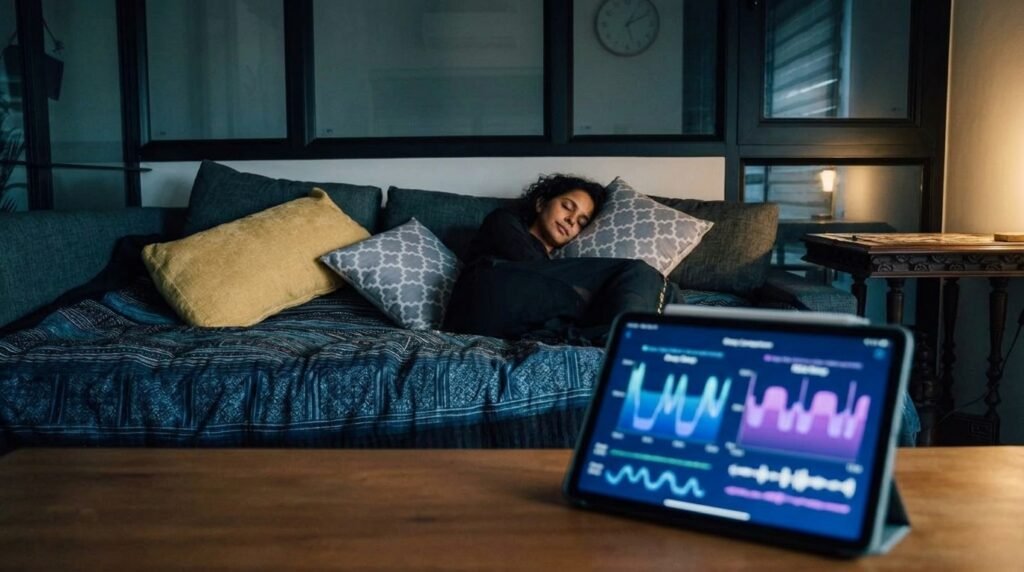
Deep Sleep and REM Sleep Become Less Prominent
Deep sleep, also called slow-wave sleep, is the deepest part of non-REM sleep. Non-REM sleep includes stages without the rapid eye movements and vivid dreaming often linked with REM sleep. Deep sleep and REM sleep both become less prominent with normal aging.
In REM sleep, the brain is active and many vivid dreams occur. Sleep architecture changes across adulthood, with reduced slow-wave and REM sleep among the common patterns. These changes do not mean that every older adult sleeps the same way.
Why Lighter Sleep Can Feel Fragmented
Sleep continuity describes how steadily we remain asleep rather than waking repeatedly. Sleep efficiency, the share of time in bed spent asleep, can decline with age. More fragmentation may leave us feeling that the night broke into separate pieces, even when we do not recall every brief awakening.
| Sleep feature | What it involves | Age-related pattern |
|---|---|---|
| Deep non-REM sleep | Slow-wave stage, the deepest sleep | Less prominent with normal aging |
| REM sleep | Rapid eye movement stage, often linked with vivid dreams | Less prominent with normal aging |
| Sleep continuity | Steady sleep with fewer awakenings | Lower efficiency and more fragmentation |
A change in sleep quality can be noticeable without changing our bedtime or the time we set aside. A few awakenings can feel more disruptive when more of the night is spent in lighter sleep.
Why Do We Get Sleepy Earlier and Wake Earlier?
Feeling sleepy earlier can be a shift in timing, not proof that we need less rest. The circadian rhythm is the body’s internal 24-hour timing system that helps regulate when we feel awake and sleepy.
With age, this rhythm can shift earlier, so older adults tend to go to bed and wake earlier. The timing system can also become less pronounced, making its daily signals feel weaker.
The Body Clock Shifts Its Timing
A shift in timing is different from a change in sleep duration. For example, we might naturally feel ready for bed at 9:30 p.m. and wake at 5:30 a.m. That earlier schedule does not, by itself, mean our body needs fewer hours.
Our internal clock responds to patterns in light and daily activity. When its timing moves earlier, we may feel alert early in the morning but ready to sleep before other people in our household.
Daily Light and Routine Help Anchor Timing
Consistent wake times give the body a regular cue for when the day begins. Daytime natural light also helps anchor daily rhythms, especially when we get light earlier in the day.
Travel, weekends, or a changing daily schedule can make timing less steady. We can notice when sleepiness arrives and whether our wake time stays consistent, rather than assuming that an early bedtime is automatically a problem.
Which Sleep Problems Become More Common With Age?
Repeated trouble falling or staying asleep may be insomnia, while other disorders can interrupt breathing or cause uncomfortable movement. Age alone cannot tell us which sleep problem is present.
Chronic insomnia means trouble falling asleep or staying asleep at least three nights a week for more than three months. Insomnia affects 20 to 40% of older adults, while obstructive sleep apnea affects more than 30%.

Insomnia Can Make Falling Asleep or Staying Asleep Difficult
Insomnia can involve difficulty falling asleep, waking often, or waking too early and struggling to return to sleep. The effects can follow us into the day, even when we have set aside enough time for bed.
Sleep Apnea Can Interrupt Breathing
Obstructive sleep apnea causes repeated pauses in breathing that may last a few seconds or longer. Snoring can be a sign, but not everyone who snores has sleep apnea. A clinician can assess symptoms and decide whether testing is appropriate.
Restless Legs and Other Movement Disorders
Restless legs syndrome causes uncomfortable sensations or urges to move the legs. These feelings often worsen at rest and at night, which can make it hard to settle down. Periodic limb movements are repeated movements during sleep that can disrupt rest.
| Condition | Common sign | How it affects sleep | Usual care pathway |
|---|---|---|---|
| Insomnia | Trouble falling asleep or staying asleep | Repeated or prolonged wakefulness | Clinician assessment; CBT-I or other options |
| Sleep apnea | Breathing pauses; sometimes snoring | Repeated breathing interruptions | Clinician assessment; CPAP may be used |
| Restless legs syndrome | Urge to move with uncomfortable leg sensations | Difficulty settling, often at night | Clinician assessment; condition-specific care |
| Periodic limb movement disorder | Repeated limb movements during sleep | Movements may interrupt sleep | Clinician assessment; treatment depends on findings |
These problems become more common with age, but they are not the same as lighter sleep. A pattern that persists or affects daytime functioning is a reason to talk with a clinician.
What Habits Can Improve Sleep After 50?
A consistent wake time is a simple place to start when our nights feel irregular. Steady timing supports sleep, while daytime activity and morning light give our daily rhythm clear cues.
Supportive habits can improve sleep, but they are not substitutes for treatment of a sleep disorder. A relaxing wind-down routine and comfortable room conditions may make it easier to settle into bed.
Keep a Consistent Schedule and Calming Routine
We can keep sleep and wake times regular, including on weekends and while traveling. A predictable routine before bed, such as quiet reading or gentle stretching, marks a calmer shift from activity to rest.
Make Daytime Choices That Support Nighttime Rest
Daytime activity supports a healthy sleep-wake pattern, and morning natural light reinforces body-clock timing. Exercise earlier in the day, since a workout close to bed may make it harder for some people to wind down.
- Keep sleep and wake times steady, even on weekends or when traveling.
- Use a calming bedtime routine to mark the end of the day.
- Exercise during the day, not within three hours of bed.
- Limit late-day caffeine and alcohol.
- Avoid large meals within two to three hours of bedtime and large amounts of late fluids.
Try a steady routine for a couple of weeks and note whether daytime alertness changes. If insomnia, apnea, or another condition is driving the problem, habits alone may not fix the cause.
Should You Nap After 50?
A brief early-afternoon nap can refresh us, while a long or late nap can make bedtime harder. About 20 to 30 minutes, taken before mid-afternoon, is a useful target for most people after 50.
Sleep pressure builds while we are awake, and a long or late nap lowers it right when we need it at bedtime. A long nap can also leave us groggy when we wake.

When Do Naps Help?
- After a short night, to stay alert and safe, especially before driving
- When we sleep well at night and naps do not change that
When Do Naps Hurt?
- When they run long, which can leave us groggy
- When they happen late in the day, which reduces sleep drive at bedtime
- When we have insomnia, since napping weakens the sleep pressure we need at night
How Do We Nap Well?
- Keep it to about 20 to 30 minutes and set an alarm.
- Nap early, before mid-afternoon.
- Lie down somewhere quiet and dim. A sleep mask and earplugs help (see our picks below).
If we nap often and nights are getting harder, the naps may be part of the problem. People with insomnia should generally skip naps or keep them brief and early.
Which Treatments Have Real Evidence?
For chronic insomnia, CBT-I alone is the most effective first-line treatment for adults. CBT-I means cognitive behavioral therapy for insomnia, a structured therapy that addresses thoughts and behaviors that keep insomnia going.
Medication is not the default first choice for every person with insomnia. Guidelines conditionally suggest CBT-I alone rather than combination therapy, and CBT-I plus medication rather than medication alone.
CBT-I Is the First-Line Treatment for Chronic Insomnia
CBT-I is designed to change the patterns that keep insomnia going. It is different from general sleep habits because it is a structured treatment focused on insomnia.
Medication Has a Limited Role
Sleep medicines may help insomnia in the short term, but they carry risks, including falls and next-day grogginess, and are not meant for long-term use. A clinician can weigh benefits and risks for a person’s specific health needs.
CPAP Treats Obstructive Sleep Apnea
Continuous positive airway pressure, or CPAP, is the standard treatment for obstructive sleep apnea. The device delivers air pressure through a mask to keep the airway open during sleep. Some people find regular use challenging, so practical support matters.
| Treatment | Condition addressed | Evidence-based role | Practical consideration |
|---|---|---|---|
| CBT-I alone | Chronic insomnia | Most effective first-line treatment | Structured therapy addressing thoughts and behaviors |
| CBT-I plus medication | Chronic insomnia | Conditionally suggested over medication alone | Clinician weighs whether medication fits |
| Sleep medication alone | Insomnia | May help in the short term | Risks; not for long-term use |
| CPAP | Obstructive sleep apnea | Standard treatment | Adherence can be challenging |
The right treatment depends on the sleep problem, so a clinician can help match the option to the diagnosis.
Which Foods and Products May Simply Help?
A comfortable, dark, quiet room makes sleep easier to pursue, but comfort aids are different from medical treatment. Room support can address light or noise without treating a sleep disorder.
Blackout curtains reduce light, while earplugs or white noise cover unwanted sounds. These matter more after 50 because lighter sleep means small disturbances wake us more easily. Our picks, chosen for strong reviews and a clear, specific job:
- MZOO Contoured Sleep Mask: Molded eye cups block light without pressing on your eyelids, which helps on early summer mornings or for a short afternoon nap. One of the highest-rated sleep masks on Amazon, with more than 100,000 reviews. Check Price on Amazon
- Mack's Soft Foam Earplugs: Inexpensive, comfortable foam earplugs that take the edge off household noise, traffic, and a snoring partner. Check Price on Amazon
- Magicteam White Noise Machine: Twenty non-looping sounds and an all-night setting, so a barking dog or street noise fades into the background instead of waking you during lighter sleep. Check Price on Amazon
- NICETOWN Blackout Curtains: Thermal blackout panels that darken a bright bedroom window and help when an earlier body clock makes dawn light wake you too soon. Check Price on Amazon
No particular food is a reliable way to induce sleep. A 2023 open-label study asked 15 elite athletes to eat two medium green kiwifruit an hour before bed for four weeks. Participants showed better sleep quality, longer total sleep, higher sleep efficiency, and fewer nighttime awakenings. The study did not show more deep sleep.
The result is interesting, but it came from a small group of young elite athletes. It does not establish kiwifruit as a treatment for older adults or for a sleep disorder. Judge any food or room aid by the specific support it offers, not as a cure.
When Should We Talk With a Clinician?
Strong daytime sleepiness or several days without sleep calls for a conversation with a clinician. Persistent trouble sleeping, falling asleep without meaning to, or frequent strong sleepiness should not be dismissed as aging.
Snoring can be associated with sleep apnea, though snoring alone cannot diagnose it. In a 2025 meta-analysis of 15 longitudinal studies involving 65,501 participants, excessive daytime sleepiness was associated with cognitive decline (risk ratio 1.26, 95% CI 1.13 to 1.41).
The same analysis found an association with all-cause dementia (risk ratio 1.68, 95% CI 1.07 to 2.66). These results show an association, not proof that daytime sleepiness causes cognitive decline or dementia.
A sleep diary kept for a couple of weeks gives a clinician a clearer picture. It can also help us spot links between our schedule and difficult nights. Record:
- Bedtime
- Nighttime awakenings
- Wake time
- Caffeine or alcohol use
- Exercise and its timing
- Naps, with start time and length
Bring the diary even if some entries are estimates. A two-week record makes the conversation more specific and useful.
When an older adult goes without sleep for days, we should contact a clinician rather than wait for the pattern to pass.
Conclusion
Our sleep may change with age, but poor rest is not something we have to accept. Lighter sleep or an earlier bedtime can be part of aging, while ongoing disruption and strong daytime sleepiness deserve attention.
Start with one practical step: write down when you sleep, nap, and how you feel during the day. If disrupted nights are affecting your days, bring that record to a clinician.
Want Yale Medicine to explain sleep and aging?
Yale Medicine explains how sleep changes as we age and what helps.
Can’t switch off at bedtime? Start with how to stop racing thoughts at night and breathing exercises to fall asleep, two practical guides for calming your mind and body in bed.
Frequently Asked Questions
How to sleep properly?
We can support proper sleep by keeping a regular sleep and wake schedule and using a calming bedtime routine. A comfortable, quiet room may also make rest easier. If problems continue, we should discuss them with a clinician instead of assuming routine changes will solve every cause. A sleep diary can help us describe the pattern clearly.
What is middle insomnia?
Middle insomnia means waking during the night and having trouble returning to sleep. The term describes a pattern, not necessarily a separate disorder. When trouble falling asleep or staying asleep happens at least three nights a week for more than three months, it can fit chronic insomnia. We should seek assessment when the pattern continues or affects daytime functioning.
How to reset sleep schedule?
We can support a steadier schedule by keeping the same wake time every day, including weekends and while traveling. Morning natural light helps anchor the body clock. With age, that clock may shift earlier, so an earlier bedtime may reflect changed timing rather than a need for fewer hours of sleep.
Should I just lie in bed if I can't sleep?
No. We do not need to turn long stretches of wakefulness into a nightly struggle. We can get up, do something quiet in dim light, and return to bed when sleepy. If trouble sleeping persists, we can ask a clinician about appropriate care.
What will knock me out to sleep?
We should avoid trying to sedate ourselves to force sleep. For chronic insomnia, CBT-I is the most effective first-line treatment, while sleep medicines may help only in the short term and carry risks. A clinician can assess our symptoms, health, and treatment options rather than relying on an unprescribed sedative.
Which fruit gives deep sleep?
No fruit has been shown to reliably produce deep sleep. A 2023 open-label study of 15 elite athletes tested two green kiwifruit an hour before bed for four weeks. It reported better sleep quality, longer total sleep, and fewer nighttime awakenings, but no increase in deep sleep.
What is the strongest natural sleep remedy?
There is no single natural remedy we can recommend as a treatment for a sleep disorder. For chronic insomnia, CBT-I has the strongest first-line role. Regular routines and room adjustments may support rest, but they are not medical treatment. When sleep problems continue, a clinician can help identify the cause and suitable options.
How long should a nap be after 50?
About 20 to 30 minutes, taken before mid-afternoon, is a good target for most people. People with insomnia should usually skip naps or keep them short and early.
Sources and further reading
- Sleep and Older Adults, National Institute on Aging
- About Sleep, Centers for Disease Control and Prevention
- Sleep architecture changes with aging, ScienceDirect
- How many hours of sleep are enough?, Mayo Clinic
- Insomnia: Symptoms and causes, Mayo Clinic
- Sleep, Wikipedia
- Circadian rhythm, Wikipedia
A quick note: this is general health information, not medical advice. Talk with your doctor about sleep problems, and before starting, stopping, or changing any medicine or supplement.