
Does Chamomile Tea Help You Sleep? Herbal Teas for Bedtime Compared
This article contains affiliate links. As an Amazon Associate, we earn from qualifying purchases, at no extra cost to you. Learn more.
Chamomile tea may help a little, but it is not a sleep treatment. A 2019 review of clinical trials found chamomile improved sleep quality scores, yet the one trial in people with diagnosed insomnia showed no benefit. For most women over 50, the real value of a bedtime tea is the calm, caffeine-free ritual it creates. Pick a gentle blend, drink a small cup early in the evening, and keep realistic expectations.
| Tea | What the evidence says | Watch out for |
|---|---|---|
| Chamomile | Some improvement in sleep quality scores; no proven benefit for insomnia | Ragweed and daisy allergies; blood thinners |
| Lavender | May help you feel more relaxed; generally recognized as safe as a food | Strong flavor; easy to overdo in blends |
| Valerian | Inconsistent trial results; value for insomnia not shown | Vivid dreams, headache, morning grogginess |
| Lemon balm, passionflower | Listed as alternatives, with little evidence behind them | Often mixed into blends with other herbs |
| Green tea | Contains some caffeine, so not a bedtime choice | Check labels on “relaxing” blends |
Does chamomile tea really make you sleepy?
Chamomile is the classic bedtime tea, and it has a gentle reputation for good reason. It is an herbal infusion made from dried chamomile flowers steeped in hot water, usually from German or Roman chamomile, as Wikipedia’s overview of chamomile explains. The flowers contain flavonoids, including one called apigenin. A Cleveland Clinic dietitian notes that apigenin may ease anxiety and promote drowsiness, which is the usual explanation for chamomile’s calming effect.
The research, though, is thinner than the reputation. A 2019 systematic review and meta-analysis in Phytotherapy Research pooled randomized trials of chamomile. It found that sleep quality improved significantly after chamomile, but a single trial in people with insomnia found no meaningful change in insomnia severity. The authors called for larger trials before drawing firm conclusions.
The National Center for Complementary and Integrative Health says much the same thing. Its chamomile fact sheet states there is very little information on chamomile’s effect on insomnia. So the fair summary is this: chamomile may help you feel a bit calmer and rate your sleep a bit better, but it will not fix true insomnia.
Why a warm cup can still help
Even if the herb itself does little, the habit around it can matter. Mayo Clinic’s sleep tips point out that calming activities before bed, such as a bath or relaxation techniques, might promote better sleep. A cup of tea, sipped slowly in dim light, is one of those signals. It tells your body the day is winding down, and it replaces habits that work against sleep, like scrolling or a late glass of wine.
Which herbal teas are worth trying at bedtime?
Most bedtime blends combine a few of the same herbs. Here is what each one brings, based on what reliable sources say.
Chamomile
Mild, slightly apple-like and easy to drink. It is the best studied of the bedtime herbs, with the modest results described above. It is a sensible first choice if you have no plant allergies.
Lavender
The Cleveland Clinic’s guide to bedtime teas notes that lavender may help people feel more relaxed and may ease anxiety, which helps if your mind races at night. The FDA lists lavender as generally recognized as safe as a food ingredient. Many women find a little lavender goes a long way, so it works best mixed with chamomile.
Valerian
Valerian is the herb most often marketed for sleep, but the evidence is weak. The NCCIH page on sleep disorders and complementary health approaches says valerian trial results have been inconsistent, its value for insomnia has not been demonstrated, and it is uncertain whether it is safe for long-term use. Cleveland Clinic lists possible side effects including vivid dreams, headaches, stomach upset and morning drowsiness. Our full guide to valerian root for sleep after 50 covers it in detail.
Lemon balm, passionflower and magnolia
These turn up in many “sleepy” blends. Cleveland Clinic lists them as alternatives if you do not like the other teas, without pointing to evidence that they help, and NCCIH’s review of sleep approaches does not cover them. Enjoy them for flavor, not as a remedy.
Peppermint and mint blends
Mint teas are pleasant and caffeine-free, but if you get heartburn at night, choose something else. Mint is on the National Institute of Diabetes and Digestive and Kidney Diseases list of foods commonly linked to reflux symptoms, along with caffeine and chocolate.
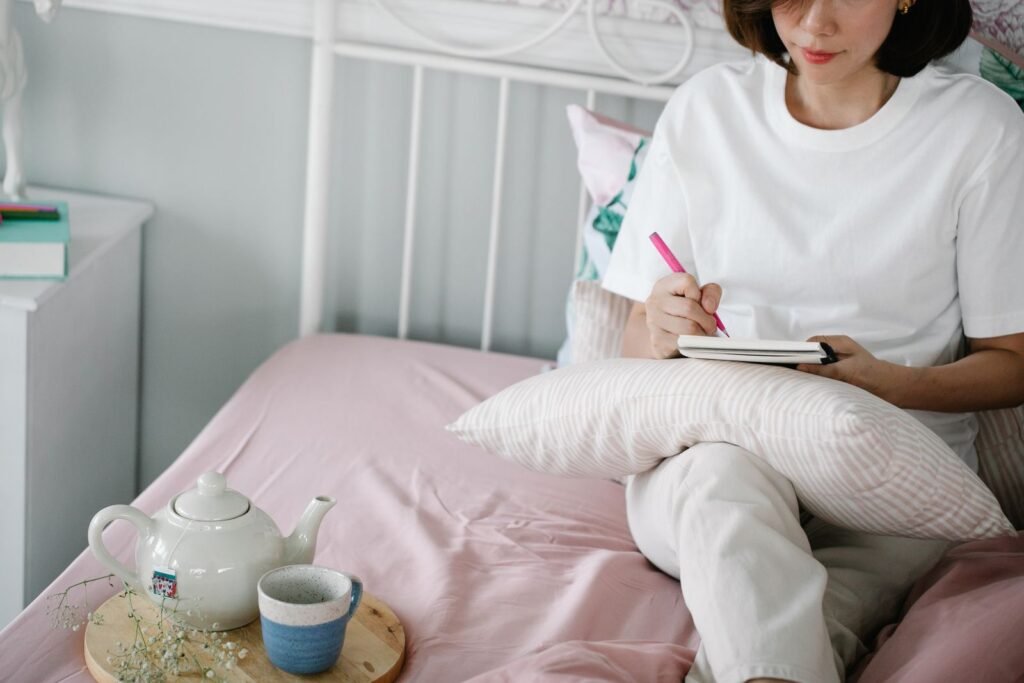
Which teas should you avoid in the evening?
The biggest mistake is a tea that quietly contains caffeine. Plain chamomile has no caffeine, but some blends are built on a true tea base. Even green tea, often sold as a gentle choice, contains some caffeine, and Cleveland Clinic advises checking labels and choosing lower-caffeine options if you drink tea later in the day. Mayo Clinic notes that the stimulating effects of caffeine take hours to wear off. If you are not sure how late is too late for you, our guide to when to stop drinking caffeine walks through it.
Watch out for these too:
- “Relaxing” blends with green tea or yerba mate. Some calming-sounding blends include a caffeinated base. Read the ingredient list, not just the front of the box.
- Kava. Kava is sometimes sold for stress and sleep, but NCCIH warns that kava use has been linked to liver injury that is sometimes serious or even fatal.
- Large mugs late at night. More fluid at bedtime can mean more trips to the bathroom, which matters more after 50.
When should you drink tea before bed?
Timing matters as much as the herb. A big mug right before lights out can wake you at 2 a.m. with a full bladder. Cleveland Clinic suggests cutting off tea a couple of hours before bed if nighttime bathroom trips are disrupting your sleep, and trying smaller amounts earlier in the evening first.
A practical plan for most women:
- Brew one small cup about 60 to 90 minutes before bed, or earlier if you wake to pee.
- Sip it slowly while doing something calm: reading a paper book, stretching, or talking with your partner.
- Keep the lights low so the ritual pairs with your body’s natural evening wind-down.
- Use the bathroom last thing before getting into bed.
If you already wake several times a night to urinate, read our guide on why you wake up to pee at night before adding any evening drink.
What does a two-week tea experiment look like?
One woman might notice she sleeps better on nights she has chamomile, but she also has chamomile on quiet evenings at home. To see whether the tea itself makes a difference, she could drink one small cup at 8:30 p.m. every night for two weeks and jot down three things each morning: how long it took to fall asleep, how many times she woke, and how rested she felt. If nothing changes, the tea is still a pleasant ritual, but she knows to look elsewhere for real help.
Is chamomile tea safe for everyone?
For most people, yes. NCCIH says chamomile is likely safe when used in amounts commonly found in teas and other foods. Side effects are uncommon but can include nausea, dizziness and allergic reactions, which in some cases are severe. A few groups should take more care:
- People with plant allergies. If you are allergic to ragweed, chrysanthemums, marigolds or daisies, you are more likely to react to chamomile.
- People taking blood thinners or other medicines. NCCIH notes reported interactions between chamomile and warfarin, and with some drugs processed by the liver. It might also interact with sedatives. Ask your doctor or pharmacist before making it a nightly habit.
- Anyone pregnant or breastfeeding. Little is known about safety here, and Cleveland Clinic advises avoiding chamomile in pregnancy.
- Anyone combining several sleep products. A “sleep” tea plus a supplement plus an over-the-counter sleep aid can stack effects. Our guide to sleep aids after 50 explains which combinations deserve caution.
When is tea not enough?
Tea is a comfort, not a cure. Cleveland Clinic’s dietitian says that if sleep problems last more than a week or two, tea alone is unlikely to help and you probably need more support. Mayo Clinic also advises contacting your health care provider if you often have trouble sleeping.
See your doctor if you have any of these:
- Trouble falling or staying asleep at least three nights a week for several weeks.
- Loud snoring, gasping or pauses in breathing that a partner notices.
- Night sweats, a racing heart or anxiety that wakes you.
- Daytime sleepiness that affects driving, work or mood.
The treatment with the strongest evidence for long-term insomnia is not a tea or a pill. It is cognitive behavioral therapy for insomnia (CBT-I), which retrains your sleep habits and the worries that keep you awake. Tea fits nicely alongside it as part of a calm routine.
How do you build a bedtime tea ritual that actually helps?
The tea works best as one piece of a predictable evening. Mayo Clinic suggests keeping a consistent sleep schedule and a relaxing routine before bed. Try pairing your cup with a few other low-effort steps:
- Set a “kitchen closes” time so the tea becomes your last food or drink of the day.
- Dim the lights and switch to a warm, low reading lamp.
- Put your phone on its charger in another room while the tea steeps.
If you want a ready-made sequence, our wind-down routine for older adults lays out a simple hour before bed, and tea fits easily into the first step.
Want to hear about the best teas for sleep?
The sleep publication Sleepopolis walks through four popular bedtime teas and what each one may offer.
What helps you make a bedtime tea habit stick?
These fit the steps above: a simple caffeine-free tea, a dim reading light for your wind-down, a way to track your two-week experiment, and a book for when tea is not enough. Our picks:
- Amazon Grocery Chamomile Herbal Tea: A plain, caffeine-free chamomile tea in bags, an easy way to start an evening tea ritual without added herbs. Check price on Amazon
- Hooga Amber Book Light: A small clip-on light with a warm amber glow, so you can read with your tea while keeping the room dim. Check price on Amazon
- Clever Fox Medical Planner: A structured health log for noting your evening drinks and how you slept, so your two-week tea test gives you a real answer. Check price on Amazon
- The Women’s Guide to Overcoming Insomnia by Shelby Harris, PsyD: A behavioral sleep medicine psychologist’s practical guide to the CBT-based steps that help when a calming cup is not enough. Check price on Amazon
Frequently asked questions
How long before bed should I drink chamomile tea?
About an hour or more before bed works well for most people, so you have time to use the bathroom before lights out. If you wake at night to urinate, have your cup earlier and keep it small.
Can I drink chamomile tea every night?
For most people, yes. NCCIH says chamomile is likely safe in the amounts found in tea, but check with your doctor if you take warfarin, sedatives or other regular medicines, or if you have ragweed or daisy allergies.
Is chamomile tea better than melatonin?
They are different things. Chamomile is a mild, calming drink with limited evidence, while melatonin is a hormone supplement with its own uses and cautions. Ask your doctor before trying melatonin, especially if you take other medicines.
What is the best tea for sleep and anxiety?
Chamomile and lavender are the gentlest, best-known options, and some research links them to feeling more relaxed. No tea is a treatment for an anxiety disorder, so talk with your doctor if worry is keeping you awake most nights.
Is lavender tea safe to drink at night?
For most adults, a cup of lavender or a chamomile and lavender blend is fine; the FDA lists lavender as generally recognized as safe as a food ingredient. Start with a weak cup, since the flavor is strong, and stop if it upsets your stomach.
Sources and further reading
- Chamomile: Usefulness and Safety, National Center for Complementary and Integrative Health
- Therapeutic efficacy and safety of chamomile for state anxiety, generalized anxiety disorder, insomnia, and sleep quality: a systematic review and meta-analysis, PubMed (National Library of Medicine)
- Sleep Disorders and Complementary Health Approaches: Usefulness and Safety, National Center for Complementary and Integrative Health
- Restless? Try These Bedtime Teas for Better Sleep, Cleveland Clinic
- Sleep tips: 6 steps to better sleep, Mayo Clinic
- Eating, Diet, and Nutrition for GER and GERD, NIDDK
- Chamomile, Wikipedia
A quick note: this is general health information, not medical advice. Talk with your doctor before starting, stopping, or changing any treatment.