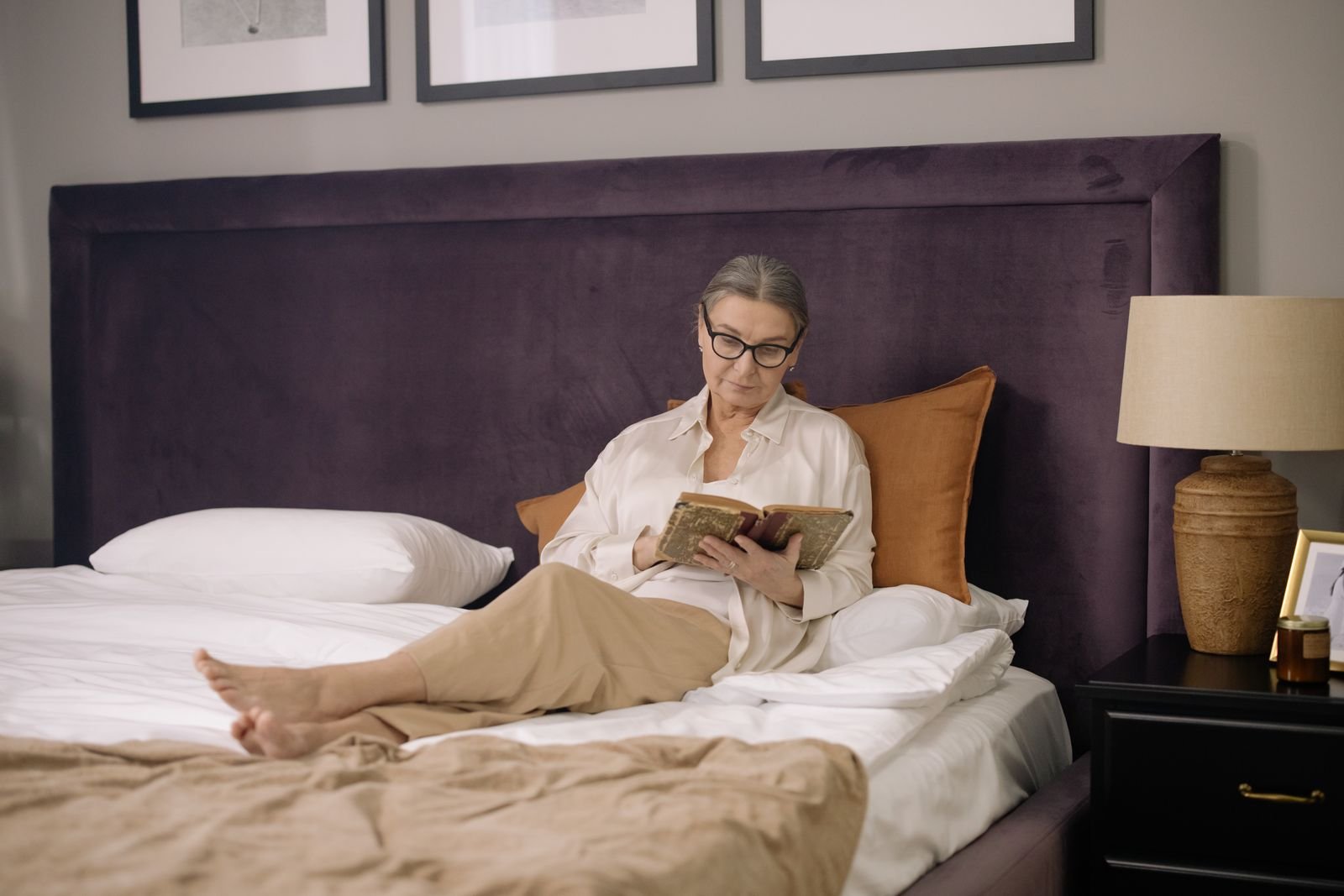
How to Fall Asleep Faster After 50: A Simple Nightly Plan
This article contains affiliate links. As an Amazon Associate, we earn from qualifying purchases, at no extra cost to you. Learn more.
To fall asleep faster after 50, keep a consistent wake time, get bright light during the day, wind down for 30 to 60 minutes before bed with screens off, keep the bedroom cool and dark, and only go to bed when you feel sleepy. If you are still awake after about 20 minutes, get up and do something calm until sleepiness returns. Caffeine after midday and evening alcohol are two of the most common hidden obstacles.
Key Takeaways
- Most healthy adults fall asleep in about 10 to 20 minutes. Regularly taking 30 minutes or more is worth paying attention to.
- A fixed wake time and morning light do more for falling asleep than any bedtime trick.
- A 30 to 60 minute wind-down with screens off tells your brain the day is over.
- Relaxation methods like slow breathing, muscle relaxation, and cognitive shuffling can help you drift off once you are in bed.
- If you are awake after about 20 minutes, get up. Forcing sleep makes it harder.
Why does it take longer to fall asleep after 50?
Stress, menopause changes, night sweats, pain, medications, and habits like evening screen time can all delay sleep. The body clock also tends to shift earlier with age, so going to bed at an old, later time can mean fighting your own rhythm. For more on how sleep changes, see Sleep After 50: Why It Changes and What Really Helps.
Lying in bed trying hard to sleep can also train your brain to link bed with being awake. That makes the problem worse over time, which is why the steps below focus on routine as much as relaxation.
What is a good wind-down routine?
- 60 minutes before bed: dim the lights, finish chores, and write tomorrow’s to-do list so it is out of your head.
- 30 minutes before: screens off. Read a paper book, listen to calm music, stretch gently, or take a warm bath or shower.
- In bed: lights out, room cool and dark. If thoughts race, use one of the relaxation methods below.
What is the 10-3-2-1-0 rule for sleep?
The 10-3-2-1-0 rule is a simple countdown that bundles the most common sleep habits into one easy-to-remember plan:
| Hours before bed | What to stop | Why it helps |
|---|---|---|
| 10 | Caffeine | Caffeine can stay active in your body for many hours, and sensitivity often increases with age. |
| 3 | Large meals and alcohol | Digestion and alcohol both disrupt sleep, and alcohol fragments the second half of the night. |
| 2 | Work and stressful tasks | Gives your mind time to switch off before bed. |
| 1 | Screens | Bright light and stimulating content keep your brain alert. |
| 0 | Snooze button presses | Getting up at your first alarm keeps your wake time steady. |
You do not need to follow it perfectly. Treat it as a checklist for spotting which habit is most likely keeping you awake.
What relaxation techniques help you fall asleep quickly?
Once you are in bed, the goal is to calm your body and give your mind something boring to hold onto. These methods are low-risk and free to try.

Slow breathing
Breathe in through your nose for a count of 4, then out slowly for a count of 6 to 8. A longer exhale helps shift your body toward rest. The popular 4-7-8 method (in for 4, hold for 7, out for 8) works the same way. Skip the long hold if it makes you feel lightheaded.
Progressive muscle relaxation
Starting at your toes, tense one muscle group for about 5 seconds, then release it as you breathe out. Work slowly up to your face. Many people notice how much tension they were carrying in their jaw and shoulders.
The “military method”
Relax your face, including your jaw, tongue, and the muscles around your eyes. Drop your shoulders, let your arms go heavy, and breathe out to relax your chest. Then picture a calm scene, such as floating on a quiet lake, for about 10 seconds. Despite claims online, it will not put most people to sleep in 2 minutes, but it is a useful way to release tension.
Cognitive shuffling
Pick a random word, like “garden.” For each letter, picture simple, unrelated objects that start with it: grapes, goat, guitar, then apple, anchor, and so on. It keeps your mind busy without the worry or problem-solving that keeps you awake.
Paradoxical intention
Instead of trying to sleep, lie in bed with your eyes open and gently aim to stay awake. It sounds backward, but it removes the pressure to perform, and for some people that pressure is the main thing keeping them up.
What daytime habits help you fall asleep at night?
- Get up at the same time every day, including weekends.
- Get outdoor light in the morning.
- Be active, but finish exercise about 3 hours before bed.
- Limit naps, and avoid them late in the afternoon or evening.
- Stop caffeine by early afternoon, including tea, soda, and chocolate.
- Skip alcohol, especially in the evening.
- Finish large meals 2 to 3 hours before bed.
What should you do if you still cannot fall asleep?
| Do | Avoid |
|---|---|
| Get up after about 20 minutes awake | Lying in bed for hours trying to force sleep |
| Sit somewhere dim and do something calm | Scrolling your phone or watching TV in bed |
| Return to bed when sleepy | Checking the clock repeatedly |
| Keep your usual wake time | Sleeping in to make up for it |
These steps come from CBT for insomnia, the recommended first treatment if trouble falling asleep has lasted three months or more.
When should you see a doctor?
See a doctor if it regularly takes you more than about 30 minutes to fall asleep, at least three nights a week for three months. Also check in if you have uncomfortable leg sensations in the evening, which can signal restless legs syndrome, or loud snoring and daytime sleepiness, which can point to sleep apnea.
Before trying over-the-counter options, read our guides to melatonin after 50 and sleep aids after 50, and talk with your doctor or pharmacist.
Want a doctor's tips for falling asleep faster?
Doctor Mike, a family medicine physician, shares sleep tips that have research behind them.
What makes a wind-down routine easier?
A few small tools make the last hour before bed calmer and darker:
- Hooga Amber Book Light: A clip-on reading light with warm amber light, ideal for the get-up-and-read-until-sleepy step without bright light jolting you awake. Check Price on Amazon
- Amazon Grocery Chamomile Herbal Tea: A caffeine-free evening ritual to replace a nightcap or late coffee. Think of it as part of a wind-down routine, not a sleep aid. Check Price on Amazon
- MZOO Contoured Sleep Mask: Molded eye cups block light without pressing on your eyelids. One of the highest-rated sleep masks on Amazon, with more than 100,000 reviews. Check Price on Amazon
- Magicteam White Noise Machine: Twenty non-looping sounds and an all-night setting, so a barking dog, traffic, or a snoring partner fades into the background. Check Price on Amazon
Go deeper: For the two most common reasons women over 50 lie awake, see how to stop racing thoughts at night and our step-by-step breathing exercises to fall asleep.
Frequently asked questions
How can I fall asleep faster naturally?
Keep a fixed wake time, get morning light, wind down without screens for 30 to 60 minutes, keep your room cool and dark, and go to bed only when sleepy. Once in bed, slow breathing or muscle relaxation can help.
How long should it take to fall asleep?
Most healthy adults fall asleep within about 10 to 20 minutes. Regularly taking 30 minutes or more, at least three nights a week, can be a sign of insomnia.
How do you fall asleep in 2 minutes?
Most people cannot reliably fall asleep in 2 minutes, despite viral tricks. Techniques like the military method or 4-7-8 breathing can relax you quickly, but steady habits matter more than any single trick.
What is the 10-3-2-1-0 rule for sleep?
It is a countdown: no caffeine 10 hours before bed, no big meals or alcohol 3 hours before, no work 2 hours before, no screens 1 hour before, and zero snooze presses in the morning.
Should I stay in bed if I can't sleep?
No. Get up after about 20 minutes, do something calm in dim light, and return when sleepy, so your bed stays linked with sleep.
Does a warm bath help you sleep?
Many people find a warm bath or shower 1 to 2 hours before bed relaxing. As your body cools afterward, it can make it easier to feel sleepy.
Sources and further reading
- About Sleep, Centers for Disease Control and Prevention
- Sleep and Older Adults, National Institute on Aging
- Management of Chronic Insomnia Disorder in Adults: A Clinical Practice Guideline, American College of Physicians, Annals of Internal Medicine, 2016
- Sleep tips: 6 steps to better sleep, Mayo Clinic
- Insomnia: Diagnosis and treatment, Mayo Clinic
- Sleep hygiene, Wikipedia
A quick note: this is general health information, not medical advice. Talk with your doctor about sleep problems, and before starting, stopping, or changing any medicine or supplement.