Does Alcohol Help You Sleep?
This article contains affiliate links. As an Amazon Associate, we earn from qualifying purchases, at no extra cost to you. Learn more.
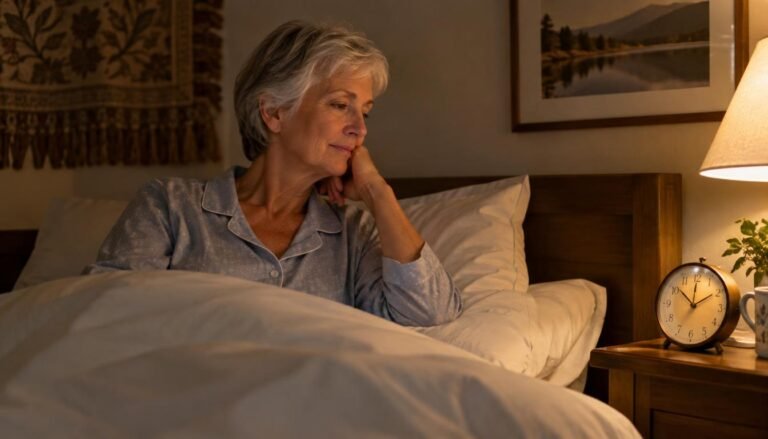
Alcohol can help you fall asleep faster, but it usually makes the night as a whole worse. As your body clears it, sleep turns lighter and more broken, which is why a glass of wine at 9 p.m. so often means you are wide awake at 3 a.m. After 50, when sleep is already more fragile, that trade tends to cost more than it gives.
Here is the short version before we get into the details:
- Falling asleep: often faster after a drink.
- First half of the night: deeper and more settled than usual.
- Second half: more waking, lighter sleep, vivid dreams and early rising.
- Breathing: snoring and sleep apnea can get worse.
- Body: more night sweats for some women, and more trips to the bathroom.
What does alcohol actually do to your sleep cycles?
Normal sleep moves through repeating cycles of light sleep, deep (slow wave) sleep and REM sleep, the stage linked to dreaming and emotional processing. Deep sleep is concentrated early in the night and REM grows longer toward morning. Alcohol pushes this pattern out of balance.
A 2013 review in Alcoholism: Clinical and Experimental Research (Ebrahim and colleagues), which pulled together the studies on alcohol and sleep in healthy volunteers, found the same picture at every dose they looked at: people fell asleep faster, the first half of the night was more consolidated, and sleep was more disrupted in the second half. The review also found that alcohol delays the first REM period at all doses, and that total REM sleep across the night drops in most studies at moderate and higher doses.
Why do you wake up at 3 a.m. after drinking?
Your liver clears alcohol at a fairly steady pace, roughly one standard drink an hour for many adults, though this varies a lot from person to person. While alcohol is in your system it acts as a sedative. Once the level falls, many sleep researchers describe a rebound: lighter sleep, more REM squeezed into the early morning, vivid or unsettling dreams, a racing heart and a feeling of being suddenly alert. If 3 a.m. waking is already your pattern, our guide on why you wake up at 3 a.m. after 50 covers the other common causes.
Does alcohol make snoring and sleep apnea worse?
Yes. The National Heart, Lung, and Blood Institute notes that alcohol can relax the muscles of the mouth and throat, which may close the upper airway, and lists drinking as a habit that raises the risk of sleep apnea. Women’s risk of apnea climbs after menopause, so a nightcap can turn mild snoring into real breathing pauses. If someone has told you that you stop breathing or gasp at night, read our page on sleep apnea in women after 50 and mention it to your doctor.
Can a drink trigger night sweats?
Alcohol widens blood vessels near the skin and is one of the triggers women most often report for hot flashes. A flush that starts in the evening can carry on as night sweats later. Our guide to menopause and sleep explains how hot flashes and sleep loss feed each other.
Why do you need to pee more after drinking?
Alcohol suppresses vasopressin, the hormone that tells your kidneys to hold on to water overnight. The result is more urine and more bathroom trips, stacked on top of the bladder changes many women already notice after 50. See why you wake up to pee at night for what else can help.
Why does alcohol hit harder after 50?
The National Institute on Alcohol Abuse and Alcoholism (NIAAA) says older people are more sensitive to the sedative, sleep inducing effects of alcohol, as well as its effects on balance and coordination. Because of changes such as reduced muscle mass and body water, some older adults reach higher blood alcohol levels than younger people after drinking the same amount. NIAAA also notes that women may be more susceptible than men to alcohol’s harmful effects.
That matters at night for three practical reasons:
- Falls: a groggy walk to the bathroom in the dark is riskier when alcohol is still affecting your balance.
- Medicines: alcohol can interact with many common prescriptions and over the counter products, including sleep aids, some pain relievers, antihistamines and medicines for anxiety or mood. Ask your pharmacist about anything you take.
- Self treating: NIAAA points out that some older adults drink to help with poor sleep, and that this can actually make sleep problems worse.
The CDC defines moderate drinking for women as one drink or less in a day. That is a health ceiling, not a sleep target: even within it, many people sleep better on nights without alcohol.
How much and how late is too much for sleep?
No single cutoff works for everyone, because body size, age, food, medicines and sleep problems all change the picture. Use this table as a general guide, not a prescription.
| Your situation | What tends to happen | What many people try first |
|---|---|---|
| One drink with an early dinner | Often little effect, though sensitive sleepers still notice lighter early morning sleep | Keep it with food and finish it several hours before bed |
| One drink close to bedtime | Faster sleep onset, then lighter, more broken sleep later | Move the drink earlier, or swap it for a warm, caffeine free drink |
| Two or more drinks in the evening | Stronger second half disruption, more snoring, more bathroom trips | Cut to one, or keep drinks to nights when sleep matters less |
| You snore or have sleep apnea | Alcohol relaxes the airway and can worsen breathing pauses | Avoid evening alcohol and talk with your doctor about your treatment |
| You have night sweats | Drinking is a common hot flash trigger | Track whether drinking nights match sweaty nights |
| You take a sleep aid or sedating medicine | Combined effects can be dangerous | Do not mix them, and ask your doctor or pharmacist about your medicines |
How can you test alcohol’s effect on your own sleep?
The most convincing evidence is your own. A simple two week experiment compares a week of your usual pattern with a week of no alcohol at all. Keep everything else as steady as you can: same wake time, same caffeine cutoff, same bedtime routine.
- Week 1 (usual pattern): drink as you normally would and log each night.
- Week 2 (alcohol free): no alcohol at all, same log.
- Compare: look at averages, not single nights. One rough night proves nothing.
Log these each morning, before your coffee, while the night is still fresh:
| Item | Example entry |
|---|---|
| Drinks, type and finish time | 1 glass of wine, finished 8:30 p.m. |
| Bedtime and wake time | 10:30 p.m. to 6:15 a.m. |
| Times you woke and why | 2 (bathroom at 2:10, awake at 4:00) |
| Night sweats (none, mild, soaked) | Mild |
| Snoring reported by partner or app | Some |
| How rested you feel (1 to 5) | 2 |
A worked example: a week 1 average of three wake ups and a rested score of 2, against a week 2 average of one or two wake ups and a score of 3 or 4, is a clear signal. If you see no difference, alcohol may not be your main sleep problem.

What are the common mistakes with a nightcap?
- Judging by how fast you fall asleep. The benefit shows up in the first 20 minutes; the cost shows up at 3 a.m. Judge by how rested you feel the next day instead.
- Drinking to fix insomnia. It tends to make insomnia worse over time. Cognitive behavioral therapy for insomnia is the first line treatment, and our guide to sleep aids after 50 explains the safer options.
- Removing the ritual without replacing it. If the nightcap was your signal to wind down, give yourself a new signal: a warm caffeine free drink, a dim lamp and a book.
When should you see a doctor?
Talk with your doctor if any of these apply:
- You feel you need a drink to fall asleep, or you are drinking more than you intend.
- You snore loudly, gasp or stop breathing in your sleep, or wake with headaches.
- You take any sleep aid, pain medicine, anxiety or mood medicine and also drink.
- You have fallen at night, or feel unsteady when you get up.
- Poor sleep lasts more than a few weeks even after cutting back.
Want a sleep scientist on alcohol and sleep?
Sleep scientist Matt Walker explains how alcohol affects sleep in this Huberman Lab clip.
What can replace the nightcap in your routine?
If a drink has been your cue to unwind, these swaps keep the ritual without breaking up your sleep later in the night.
- Amazon Grocery Chamomile Herbal Tea: A warm, caffeine free mug to hold in place of a glass of wine. Think of it as part of a wind down routine, not a sleep aid. Check price on Amazon
- Hooga Amber Book Light: A clip on amber reading light for the last half hour before bed, useful if you are replacing a drink with a chapter of a book. Check price on Amazon
- Fitbit Inspire 3: A simple tracker that logs wake ups and sleep time, handy for the two week experiment if you prefer data to a paper log. Treat its sleep stage estimates as rough. Check price on Amazon
- Quiet Your Mind and Get to Sleep by Colleen Carney, PhD, and Rachel Manber, PhD: A CBT for insomnia workbook from two insomnia researchers, a good fit if you have been using alcohol to get to sleep. Check price on Amazon
Frequently asked questions
Is red wine better for sleep than other drinks?
No type of alcohol has been shown to protect your sleep. What matters is the amount of alcohol and how close to bedtime you drink it. A glass of wine, a beer and a cocktail all carry roughly the same effect when they hold a similar amount of alcohol.
Does eating food with a drink reduce its effect on sleep?
Food slows how quickly alcohol is absorbed, so your blood alcohol level rises more gently. It does not remove the alcohol, and your body still has to clear it. A drink with dinner is generally easier on sleep than a drink on an empty stomach at bedtime.
How long after drinking does sleep go back to normal?
Most of the disruption happens on the night you drink, as the alcohol clears. Many people find a single heavy night can leave them groggy the next day too. Regular evening drinking can keep sleep lighter night after night, so the two week alcohol free test is the best way to see your true baseline.
Is non alcoholic wine or beer a good swap?
For many people it is a useful way to keep the ritual. Check the label, since some products labeled non alcoholic still contain a small amount of alcohol. Also watch the volume late in the evening, because any large drink close to bed can mean more bathroom trips.
Why do I sleep so heavily after drinking but still feel tired?
The heavy, knocked out feeling early in the night is the sedative effect. The second half is lighter and more broken, and REM sleep is often reduced or shifted. You may not remember the brief wake ups, but they still cost you restorative sleep.
Sources and further reading
- Alcohol and sleep I: effects on normal sleep, Alcoholism: Clinical and Experimental Research (PubMed)
- Aging and Alcohol, National Institute on Alcohol Abuse and Alcoholism
- Sleep Apnea: Causes and Risk Factors, National Heart, Lung, and Blood Institute
- Alcohol Use and Your Health, Centers for Disease Control and Prevention
- Alcohol, MedlinePlus
- Sleep tips: 6 steps to better sleep, Mayo Clinic
- Insomnia: Symptoms and causes, Mayo Clinic
- Why alcohol and menopause can be a dangerous mix, Mayo Clinic News Network
- Alcohol (drug), Wikipedia
- Rapid eye movement sleep, Wikipedia
A quick note: this is general health information, not medical advice. Talk with your doctor before starting, stopping, or changing any treatment.